
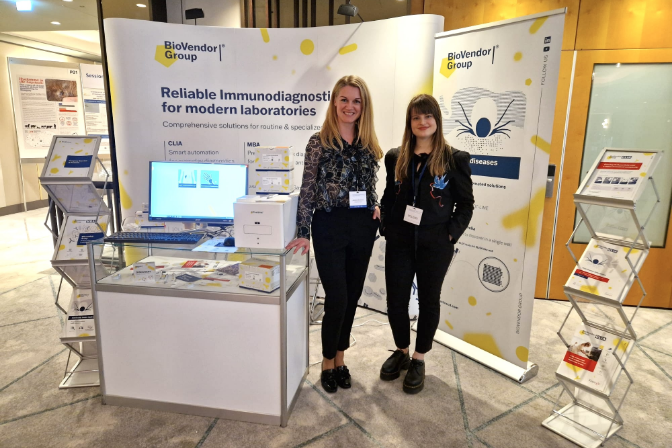
The International Symposium on Tick-Borne Pathogens and Disease (ITPD) 2026, held in Vienna from March 22–25, 2026, once again confirmed the growing importance of tick-borne diseases in research, diagnostics and clinical practice.
BioVendor was present at the event with a booth, showcasing our diagnostic solutions for tick-borne diseases across ELISA, BLOT-LINE, Microblot-Array (MBA) and CLIA technologies. Our colleagues from development and production also attended the scientific programme, following the latest discussions and trends shaping the field.
Key themes across the scientific programme
This year’s programme strongly emphasized surveillance, prevention and epidemiology, confirming the increasing need to study ticks and tick-borne pathogens not only at the level of laboratory detection, but also in terms of their spread and the importance of raising awareness among both healthcare professionals and the wider public.
Another strong message throughout the conference was the importance of correct diagnostic decision-making and patient risk assessment. These aspects are essential to avoid unnecessary testing, false-positive results and antibiotic overuse. The discussion highlighted that progress in diagnostics is not only about developing new tools, but also about using them appropriately within the correct clinical context.
According to Monika Dvořáková Heroldová, Ph.D., Deputy Head for LPP at the Institute of Microbiology:
“What caught my attention at ITPD 2026 were the new epidemiological insights into the occurrence of ticks in urban environments. Data from the Czech Republic show a high prevalence of Borrelia burgdorferi s. l. of around 25%, and comparable findings were also reported in Austria, where monitoring based on citizen science enabled researchers to capture even less common tick species.”
From data to communication: a Czech perspective
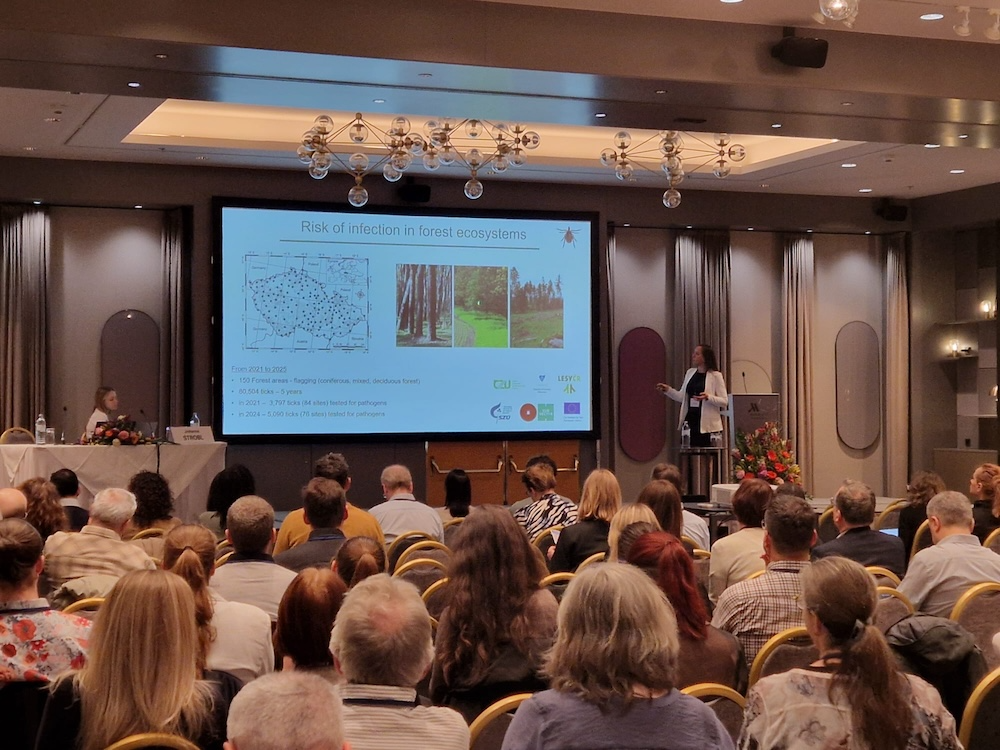
One of the standout contributions was the presentation by Katerina Kybicova, Ph.D., Head of the National Reference Laboratory for Lyme Borreliosis at the National Institute of Public Health, focused on a Czech One Health approach to tick surveillance. As she highlighted:
“Our work shows that tick-associated risks are no longer limited to forested areas, as urban environments may also show high tick density and pathogen prevalence. This underlines the importance of combining surveillance, public communication and practical prevention tools such as a mobile application developed in Czechia (Klíšťapka.)”
Her contribution clearly demonstrated how long-term surveillance data can be translated into practical tools that support both awareness and prevention – effectively bridging the gap between research and real-world impact.
From epidemiology to diagnostic innovation
The conference also brought valuable insights into the diagnosis of neuroborreliosis and the search for new diagnostic approaches.
“Important insights were also presented in the diagnosis of neuroborreliosis, especially regarding the role of CXCL13 in cerebrospinal fluid, which may improve diagnostic sensitivity, although the optimal cut-off values remain under discussion, as was also shown for the ReaScan POCT test,”
summarized Monika Dvořáková Heroldová, Ph.D., Deputy Head for LPP at the Institute of Microbiology, and highlighted emerging approaches in biomarker research:
“Attention was also given to new diagnostic concepts, such as the use of lipid mediators in urine as potential non-invasive biomarkers of tick-borne diseases.”
Translating insights into diagnostic solutions
The topics discussed at ITPD 2026 closely reflect the direction in which diagnostic needs are evolving – from accurate detection to well-structured diagnostic pathways and clinically relevant interpretation.
Jan Janeček, CLIA Development Manager at BioVendor, says:
"At BioVendor, we address these needs through a broad portfolio of diagnostic solutions for tick-borne diseases, combining ELISA, BLOT-LINE, MBA and CLIA technologies. This portfolio now includes our recently IVDR-certified CLIA Borrelia CSF kits, designed for the determination of specific antibodies in both serum and cerebrospinal fluid, enabling assessment of intrathecal antibody synthesis."
This is supported by our IVDR-compliant Antibody Index Software, contributing to the reliable diagnosis of neuroborreliosis.
Ongoing development activities are focused on expanding the portfolio and supporting more comprehensive diagnostic strategies in line with current trends in epidemiology and clinical practice.
Notably, our strategic partner MIKROGEN GmbH is contributing to the development of CLIA CXCL13, further enhancing our diagnostic capabilities.
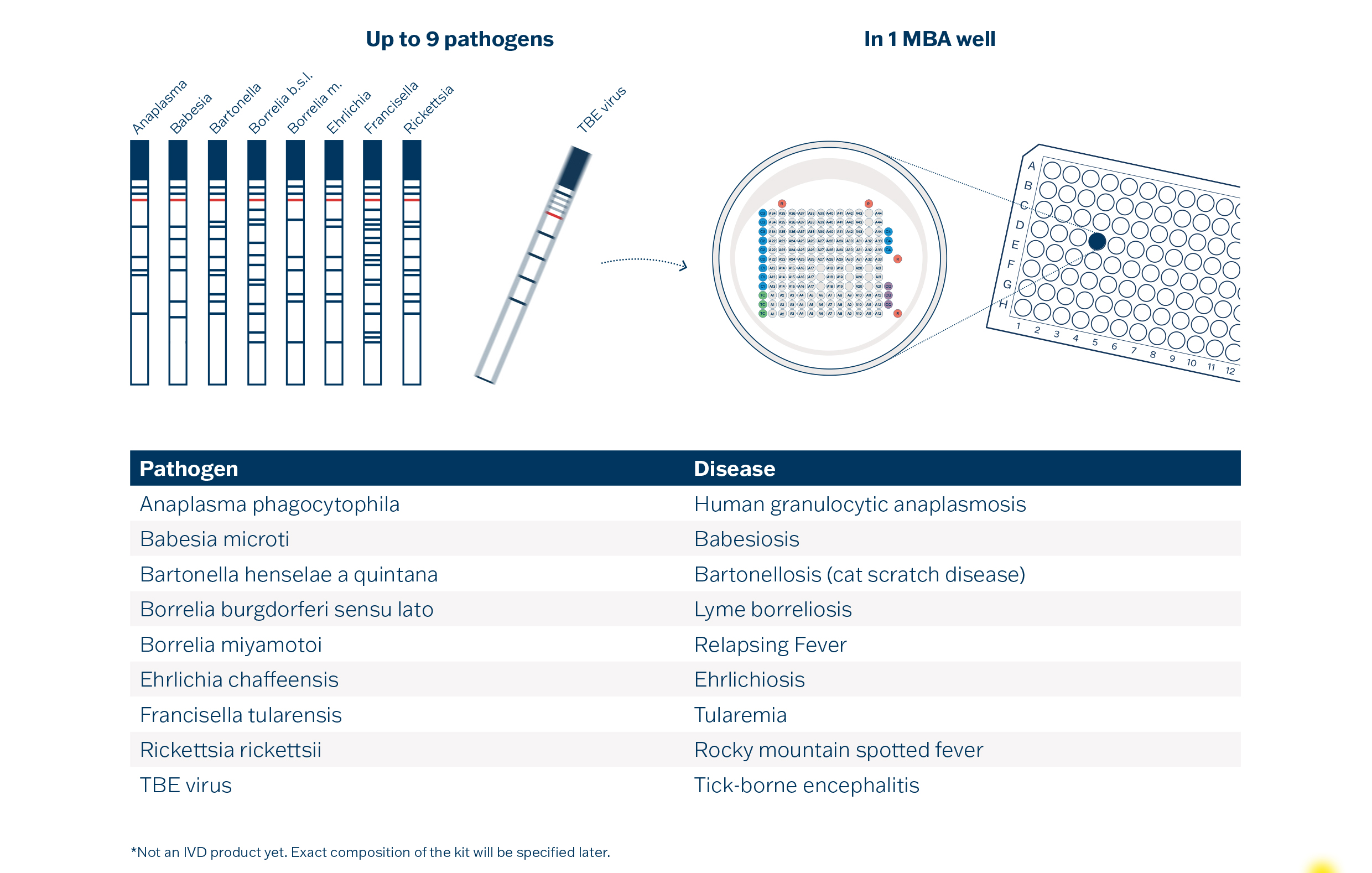
"Development efforts also include the MBA Vector Transmitted Infections Panel – an innovative diagnostic solution designed to detect a wide range of vector-borne diseases. This advanced panel extends beyond tick-borne infections, covering pathogens transmitted by mosquitoes, fleas, lice, and other blood-sucking insects,"
adds Zuzana Gavačová, Product Manager for Operational Marketing at BioVendor.
What makes this solution particularly valuable is its ability to deliver comprehensive results from a single test, significantly simplifying the diagnostic process. By enabling simultaneous detection of multiple infections, the panel offers a major advantage in regions with a high prevalence of vector-borne diseases, as well as for travelers and patients with non-specific symptoms, where accurate differential diagnosis is essential.
Conclusion
ITPD 2026 confirmed that the field of tick-borne diseases is evolving on multiple fronts – through stronger surveillance, deeper epidemiological insight, more responsible diagnostic algorithms, and improved communication towards both experts and the public.